What if you woke up one morning to a world that has suddenly, inexplicably fallen apart?
The news is filled with panicked reports of widespread violence, people attacking others in the streets, chaos spilling from every corner of society. The word “zombie” gets tossed around in hushed tones, at first as a joke, but then with mounting dread as the footage starts to come in.
The footage is shaky, blurry, and full of screaming..
But it’s unmistakable. People, their faces twisted in hunger, attacking others like animals. The unthinkable has happened – a zombie apocalypse has begun.
At first, the scale of the disaster is hard to comprehend. The government issues warnings, urging people to stay indoors, lock their doors, and avoid any contact with the infected.
Public officials downplay the severity, calling it a viral outbreak, something that modern medicine can handle.
But you’ve seen the footage, the clips of people tearing each other apart, bloodstained streets, and lifeless bodies that, moments later, are staggering back to their feet.
No one knows exactly how it started, whether it’s a mutated virus, a failed experiment, or something more sinister.
The details don’t matter anymore because what’s important is survival. And survival, in this new reality, means one thing.
Avoiding the infected at all costs.
The first few days are critical.
Society tries to hold itself together, but cracks begin to show immediately. Hospitals are overwhelmed as the infected flood in, and it doesn’t take long for the staff to realise they can’t contain the spread.
Soon, medical workers are among the infected themselves, and hospitals become death traps.
The police and military are deployed to control the streets, but their numbers are stretched thin.
Videos surface of soldiers firing into crowds as the infected swarm them, ignoring the bullets until they’re close enough to grab, bite, and infect.
The world you knew, the routines and the certainties, crumble with terrifying speed, don’t they?
You gather what you can. Food, water, anything that might help – and barricade yourself in your home.
But the isolation is suffocating.
The television channels have mostly gone off the air, and the internet is slow, patchy, filled with misinformation, and flooded with desperate pleas for help.
Every sound outside feels like a potential threat because it is a potential threat.
The banging of a trash can, the far-off siren, even the low hum of the wind through the streets, everything feels like a warning that something is coming.
The sense of safety, the feeling that your home is your refuge, evaporates. Instead, you start wondering how long your door will hold.
And then, they come.
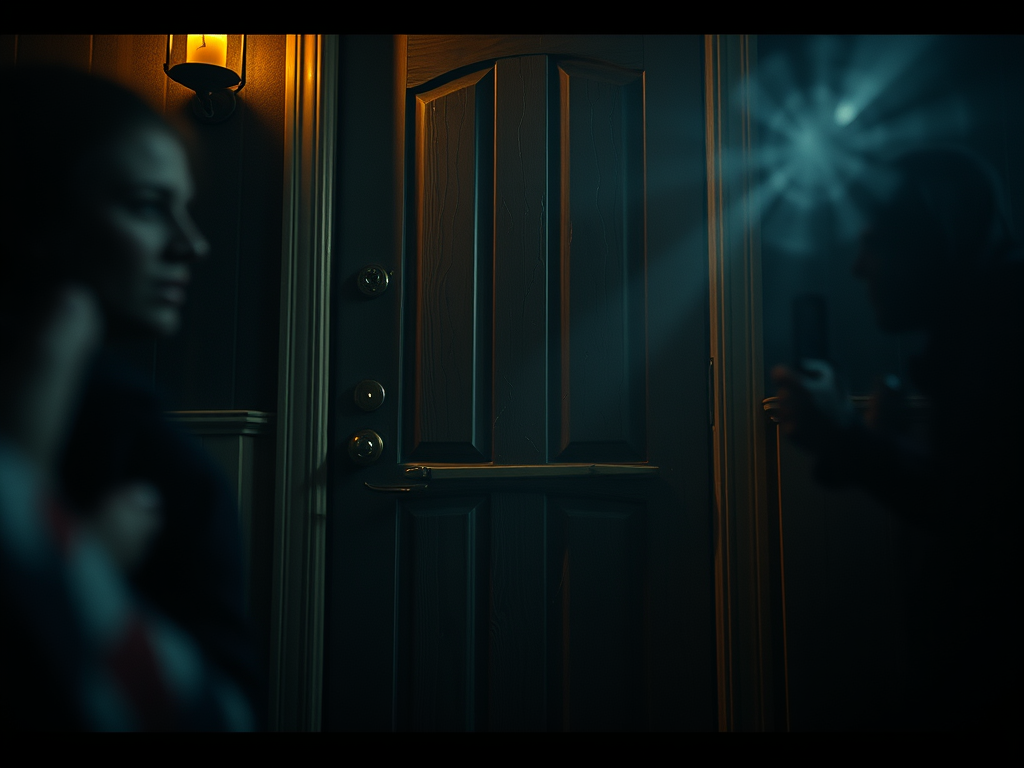
Maybe it’s a neighbour, maybe it’s a stranger, but the infected find their way to your doorstep. You can hear them outside, scraping against the door, groaning, and the unmistakable sound of them trying to break in. Your heart pounds in your chest, adrenaline surging through your veins. There’s no reasoning with them, no pleading for safety. They are no longer human… just empty, mindless shells driven by hunger.
If they get in, you know it’s over. You brace yourself, maybe holding a weapon, maybe just hoping the door will hold. There’s no room for anything else in your mind now except the singular focus of..
survival.
Days stretch into weeks, and it becomes clear that the government is no longer in control. The news, when you can get it, talks of entire cities being overrun, military defences collapsing, and safe zones that have gone dark.
Social order breaks down as people realise there’s no cavalry coming, no help on the way. Some people band together, forming makeshift communities in the hope that numbers will protect them.
Others take a more brutal approach, seeing every other person as a threat or a resource to be taken by force.
Trust is a luxury few can afford anymore.
Every encounter with another human is fraught with tension. Will they help you, or will they turn on you for a can of food or a weapon? The world has become a place where survival means making impossible choices, and those choices define who you become in this new world.
The infected, for their part, don’t tire, don’t negotiate, and don’t retreat. They’re a constant, growing presence, moving in hordes that sweep through neighbourhoods, tearing apart anything in their path. They don’t need rest or shelter, and they outnumber the living by the thousands.
They seem to sense when people are near, drawn by sound, movement, or perhaps something more primal.
At first, they seem like individuals – each one a grotesque parody of the person they used to be. But over time, they become more like a single, terrifying force, an unstoppable tide that wears down every defence.
As resources dwindle, leaving the relative safety of your shelter becomes necessary. You’re forced to venture out into the world that’s now a twisted version of its former self. Streets that were once filled with life are now littered with abandoned cars, overturned shopping carts, and the decaying remains of those who didn’t make it.
You move cautiously, knowing that any noise could attract the infected. Or worse, other survivors who see you as competition. The world feels smaller and infinitely more dangerous. Every outing is a calculated risk, but staying hidden means slowly starving, running out of water, or losing your mind to isolation.
It’s in these moments that you start to understand the real horror of a zombie apocalypse.
It’s not just about the infected themselves, it’s about the collapse of everything you took for granted. The structures that supported daily life- law, society, community – they are all gone, and you’re left to navigate a world that no longer makes sense.
There’s no clear path forward, no roadmap for how to survive. Every decision you make could be your last, and the consequences of even the smallest mistake can be deadly.
Yet, despite all this, the human spirit is remarkably resilient.
Some people find ways to adapt. Small groups of survivors start to organise, building new communities in the ruins of the old world.
They share resources, protect each other, and try to find some semblance of normalcy. In a world filled with death, there’s still life, still hope, and still a future, albeit a fragile one.
These communities are small, often mobile, and always on guard, but they represent something important – the refusal to give up. Against all odds, people find ways to endure.
Of course, the challenges are immense. Every day is a battle – sometimes against the infected, sometimes against other survivors, and sometimes just against the crushing despair that comes from living in a world where death lurks around every corner. Supplies are scarce, and scavenging becomes more dangerous as the infected continue to roam, their numbers ever-growing. Medicine is hard to come by, and a simple injury can turn deadly without proper care. But the survivors press on, motivated by the basic human instinct to survive, to keep going no matter how dark the world has become.
Over time, you learn to move quietly, to avoid unnecessary risks, and to trust only a select few. You learn the patterns of the infected, how to avoid them, how to hide when necessary, and how to fight when there’s no other choice. The first time you’re forced to confront one up close, it’s a terrifying, heart-pounding experience. There’s nothing human left in their eyes, only the cold, animalistic need to consume. You have no choice but to defend yourself, and the realisation hits you hard: this is the new reality. Every day, every moment is a fight for survival.
It’s not long before you start to hear rumours of a possible cure, or at least some way to halt the infection. Some say there are scientists holed up in underground labs, working day and night to find a solution. Others claim the military is regrouping somewhere, preparing to launch a counteroffensive and retake the cities. Whether these rumours are true or not is anyone’s guess, but they provide a glimmer of hope, something to hold onto in a world that has otherwise gone mad. Maybe there’s a way out of this nightmare after all. Maybe, just maybe, there’s a future beyond the apocalypse.
But the truth is, even if a cure is found, the world will never go back to the way it was. Too much has been lost, too many lives shattered. The scars of the apocalypse will run deep, both in the landscape and in the survivors. The trauma of seeing the world end in such a violent, grotesque way will linger for generations. The idea of safety, of a world where people can live without constant fear, will feel like a distant memory. Even if the infected are stopped, the world has been forever changed.
And yet, there’s a part of you, buried deep beneath the layers of fear and exhaustion, that refuses to let go of hope. Humanity has faced extinction before and survived. This time, it may take everything we have, and many of us won’t make it. But for those who do, there’s the possibility of rebuilding, of creating a new world from the ashes of the old. It won’t be easy, and it won’t be the same, but perhaps it can be something better, something built with the knowledge of how fragile life truly is.
In the end, a zombie apocalypse is as much a story of survival as it is a story of loss. It’s about what we’re willing to do to protect ourselves and each other, how far we’ll go to stay alive in a world that has stopped making sense. It strips away everything superficial and forces us to confront the most basic, primal parts of ourselves. We might not like what we see in the mirror, but we’ll do whatever it takes to survive.
And in that, there’s something undeniably human.