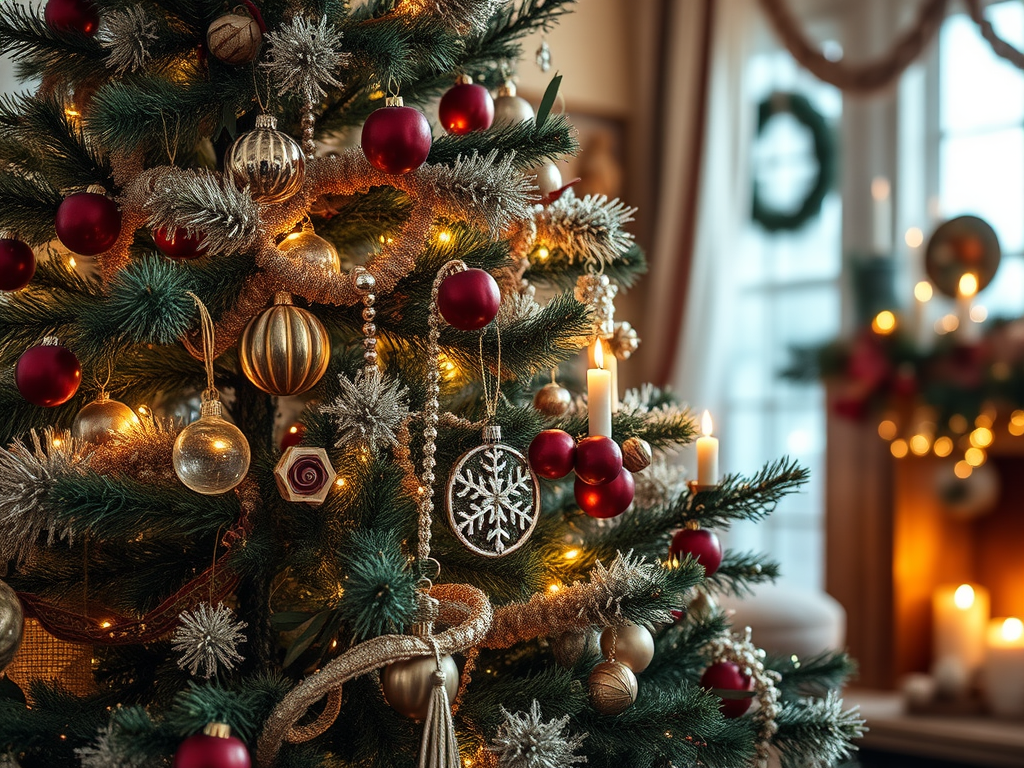
The tradition of decorating Christmas trees with ornaments, tinsel, and other festive embellishments is a cherished practice with deep historical roots. It’s a custom that has evolved over centuries, drawing on religious symbolism, cultural shifts, and even technological innovations.
But why do we hang ornaments? Why do we have Christmas trees at all? And where does tinsel fit into this glittering tableau? To understand, we need to journey back to the origins of these practices and explore how they have transformed over time.
The use of evergreen trees during winter predates Christmas itself. Ancient peoples across Europe revered evergreens as symbols of life and renewal during the cold, barren months of winter. In pagan traditions, boughs of pine, spruce, or fir were often brought into homes or used in rituals to ward off evil spirits and celebrate the winter solstice. These evergreens served as a reminder that life persisted even in the harshest conditions.
The idea of using an entire tree as a focal point for celebration, however, didn’t emerge until later. The Christmas tree as we know it likely originated in 16th-century Germany. Legend has it that Martin Luther, the Protestant reformer, was inspired by the sight of starlight filtering through evergreen branches one night. To recreate this vision, he is said to have brought a small tree indoors and adorned it with candles.
Whether this story is entirely accurate is debatable, but it reflects a broader trend in which Christians began associating evergreen trees with the celebration of Christ’s birth. The triangular shape of the tree was seen as symbolic of the Holy Trinity, and its evergreen nature echoed themes of eternal life.
In those early days, trees were decorated sparingly with items that were readily available. Apples, nuts, and other edible treats were common, symbolising the bounty of nature and the story of Adam and Eve. Apples, in particular, were a nod to the forbidden fruit, linking the tradition to the Christian narrative of redemption through Christ. Over time, these natural decorations gave way to more elaborate embellishments. By the 17th century, glassblowing artisans in Germany’s Thuringia region began crafting delicate ornaments, a practice that would later become a hallmark of Christmas tree decorating.
The practice of having Christmas trees spread gradually across Europe. In Britain, it gained prominence after Queen Victoria and Prince Albert popularised it in the 19th century. Albert, who was of German descent, introduced the tradition to the royal household, and an illustration of the royal family gathered around a lavishly decorated tree was widely published in 1848. This image captivated the public and set a trend that soon spread throughout the English-speaking world.
In the United States, Christmas trees began to appear in the homes of German immigrants during the early 19th century. Initially viewed as a quaint foreign custom, the practice gained mainstream acceptance as Americans embraced the Christmas tree as a central symbol of the holiday.
By the late 19th century, mass-produced ornaments were readily available, and electric lights soon replaced candles, making trees safer and more accessible.
Tinsel, a glittering addition to Christmas trees, has its own fascinating history. Originating in Germany in the early 17th century, it was initially made from real silver. Artisans hammered the silver into thin strips to create strands that could catch the flicker of candlelight. Tinsel was a luxurious item, reserved for the wealthy, and was meant to reflect light in a way that mimicked the appearance of icicles.
Over time, as silver proved costly and prone to tarnishing, other materials were used, including aluminium and later plastic. By the mid-20th century, tinsel had become a mass-market item, contributing to the shimmering spectacle of modern Christmas trees.
As decorating trends evolved, so too did the types of ornaments people used. In the early 20th century, ornaments often had a homemade quality, crafted from paper, wood, or fabric. These personalised touches reflected the intimate, family-oriented nature of the holiday.
By the mid-20th century, however, mass production and consumer culture transformed Christmas tree decorating into a more uniform and commercialised activity. Glass ornaments, produced in factories like those in Lauscha, Germany, became staples, and themed trees began to emerge, showcasing cohesive colour schemes or matching decorations.
The post-war era saw a surge in creativity and experimentation with Christmas tree decor. Aluminium trees, popular in the 1950s and 60s, marked a departure from natural evergreens, reflecting the space-age aesthetic of the time. These shiny, metallic trees were often paired with rotating colour wheels that cast vibrant hues across their branches.
This period also saw the rise of novelty ornaments and themed decorations, as people began to use their trees as expressions of personality and taste.
In recent decades, Christmas tree trends have continued to evolve, blending tradition with modernity. Minimalist trees with monochromatic decorations coexist with extravagant, over-the-top displays. Some people opt for eco-friendly decorations, using recycled materials or natural elements like dried oranges and pinecones. Others embrace technology, incorporating LED lights and interactive ornaments into their designs.
Artificial trees have become increasingly realistic, offering a low-maintenance alternative to real evergreens while catering to changing lifestyles.
Despite these trends, certain elements of Christmas tree decorating remain timeless. Ornaments, whether they are mass-produced baubles or cherished heirlooms, continue to hold deep sentimental value. Each one tells a story, marking a moment in time or a memory worth preserving. Tinsel, though less common today, still evokes a sense of nostalgia, reminding us of the way light dances on a tree’s branches. And the act of decorating itself, gathering as a family, placing each ornament with care, is a ritual that ties generations together.
The Christmas tree, with its ornaments and tinsel, is more than just a seasonal decoration. It is a symbol of continuity, adaptation, and shared joy. Its history reflects our collective journey through centuries of change, from pagan celebrations to Christian traditions, from handmade trinkets to high-tech displays. As we hang ornaments on its branches and drape it in glittering strands, we participate in a tradition that is both deeply personal and universally cherished.
In the end, the Christmas tree and its decorations remind us of what the season is truly about: the beauty of togetherness, the warmth of cherished memories, and the enduring magic of hope and light in the darkest days of the year. Whether adorned with homemade crafts, vintage glass baubles, or strands of sparkling tinsel, the tree remains a centrepiece of our celebrations, a luminous testament to the enduring spirit of Christmas.