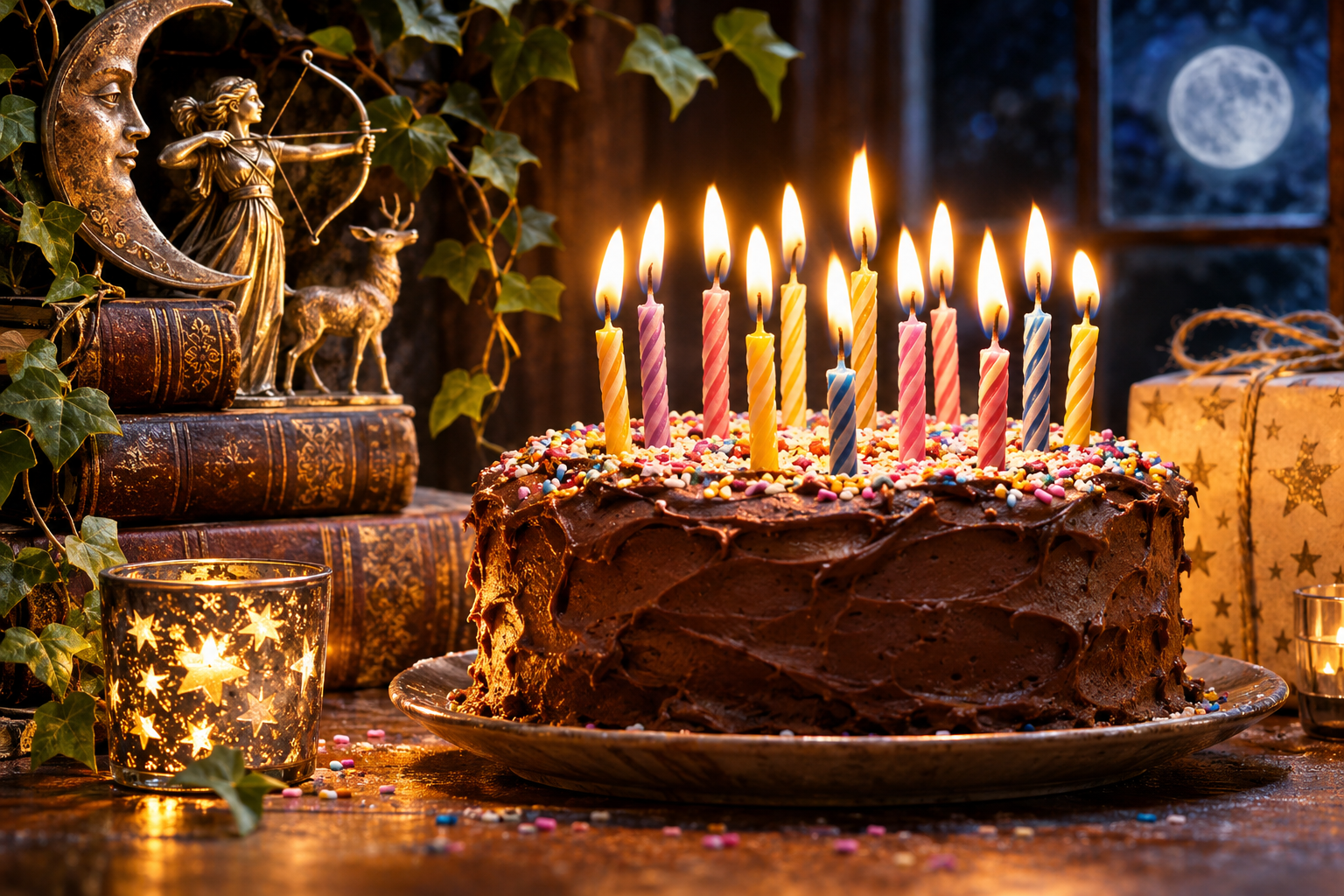
There is something wonderfully peculiar about birthdays. Once a year, perfectly sensible adults gather around a cake, set fire to a collection of small candles, sing a song that everybody knows but nobody sings particularly well, and watch expectantly while somebody closes their eyes and makes a wish. Nobody is allowed to ask what the wish was, because telling would apparently ruin the magic, and the whole business must be accomplished in a single breath. We do this without giving it much thought, yet strip away the icing, paper hats and questionable singing, and what remains looks remarkably like an old-fashioned magical ritual.
Birthdays have not always been the universal celebrations we know today. Although people in the ancient world certainly marked important anniversaries, the annual birthday party, complete with cake, candles and presents, became widespread much more recently. In Western Europe and North America, familiar domestic birthday celebrations gained popularity during the nineteenth century, particularly among prosperous families. Before then, many ordinary people had little reason to celebrate the anniversary of their birth, and some did not even know the precise date. For those who did celebrate, however, a birthday offered something more than an excuse for a feast. It marked another successful journey around the sun, another year survived, and the hope of many more to come.
The candles are perhaps the most intriguing part of the whole affair. One popular explanation takes us all the way back to ancient Greece, where round cakes were offered in honour of Artemis, goddess of the hunt and the moon. According to the familiar story, candles were placed upon these cakes to imitate moonlight, their smoke carrying prayers towards the heavens. It is a lovely explanation, and certainly one with a suitably magical atmosphere, but there is a small problem. Although offerings to Artemis are historically documented, there is no firm ancient evidence connecting them directly with our modern custom of putting birthday candles on cakes.
Sometimes folklore preserves an ancient practice, and sometimes it supplies an irresistible explanation for something that came along much later.
We find rather firmer ground in Germany, where children’s birthday festivities known as Kinderfeste helped establish the candle-covered cake. By the eighteenth century, German birthday celebrations could involve candles representing the years of a person’s life, with an additional flame sometimes symbolising the light of life or the hope of another year. In some traditions, the candles were kept burning for much of the day, with replacements provided when necessary. Fire was more than decoration here. The birthday was regarded in some folk beliefs as a particularly vulnerable occasion, and the light offered a comforting suggestion of protection, blessing and continued life.
The making of a birthday wish adds another fascinating layer. A Swiss account recorded in the nineteenth century describes candles being extinguished before the birthday cake was eaten, while later customs made the secret wish and the requirement to blow out every candle in one breath central to the celebration. The precise origins of the wish are difficult to establish, but its magical logic is familiar enough. A desire is formed silently, an action is performed, and the hoped-for result is entrusted to forces beyond ordinary human control. It is sympathetic magic in miniature, performed today in kitchens and dining rooms rather than beneath the stars.
Then there is the peculiar insistence that the wish must remain a secret. Nobody has ever satisfactorily explained why announcing that you would quite like a new bicycle, a lottery win or a peaceful afternoon should render the universe unwilling to cooperate. Nevertheless, the prohibition makes perfect sense within the wider world of folk belief, where secrecy is often regarded as a way of protecting an intention from interference. A wish spoken too freely might lose its special power. Whether or not anyone genuinely believes this, most of us still understand the rules instinctively. Make your wish, keep your mouth shut, and blow.
Even the familiar greeting of ‘many happy returns’ carries more history than we might expect. The expression was in use during the early eighteenth century and was not originally confined to birthdays. It could be applied to other happy anniversaries and occasions, expressing the hope that the day would return repeatedly, bringing fresh happiness each time. In 1716, Joseph Addison discussed the Roman birthday salutation multos et felices, conveying the wish for many happy returns. It is a rather beautiful sentiment when you think about it. We are not simply congratulating somebody for having reached another birthday. We are wishing them the opportunity to experience the happiness of the day again and again.
Perhaps that is why birthday customs have proved so remarkably enduring. Beneath the presents, cards and arguments about whether anybody actually wants that many candles on a cake, there is a very old human impulse to celebrate life and invite good fortune into the future. The precise traditions have changed, and some of the stories told about their origins are undoubtedly more romantic than reliable, but the underlying intention remains reassuringly constant. We gather around somebody we care about, offer them our good wishes, share something sweet, and mark the fact that we are glad they are here.
So the next time somebody brings out a cake blazing like a small domestic bonfire, consider what is really happening. There is fire, there is an unspoken wish, there is a little ceremony performed according to rules that everybody seems to know, and there is a room full of people hoping that the coming year will be a good one. You might not believe in magic, but it is difficult to imagine a lovelier way of practising it.
And if the candles need two breaths rather than one, perhaps the universe will be kind enough to overlook it.
After all, we could all do with a little more birthday magic.