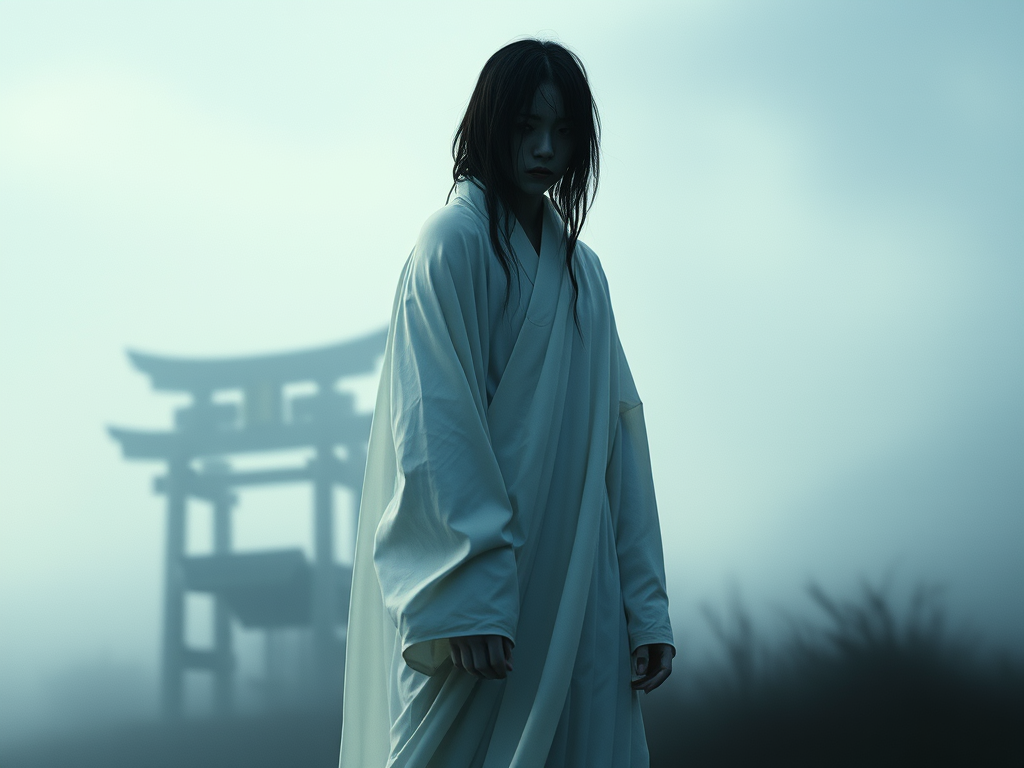
In Japanese culture, yūrei hold a unique and haunting presence, embodying the complexities of death, grief, and unresolved issues.
These spirits, often likened to Western ghosts, are believed to be the souls of individuals who have not found peace after death. The term “yūrei” translates to “faint spirit” or “dim spirit,” and these apparitions are typically depicted as ethereal figures, often in white funeral garments, with long, unkempt hair and a sorrowful demeanor. Their portrayal is deeply rooted in Japan’s historical beliefs about the afterlife, spiritual practices, and attitudes toward death.
Central to the concept of yūrei is the belief that when a person dies, their soul may become trapped in the world of the living if they have unresolved issues. These unresolved matters can stem from a variety of sources: unfinished business, violent or tragic deaths, unfulfilled promises, or intense emotions such as anger, jealousy, or love. In essence, yūrei are often seen as manifestations of human emotions that linger beyond death, reflecting the pain, suffering, and struggles that the deceased experienced in life.
Traditionally, the yūrei are classified into several categories based on the circumstances of their deaths. One of the most notable types is the onryō, a vengeful spirit who seeks retribution for wrongs done to them in life. Onryō are often associated with violent or untimely deaths, such as murder or betrayal, and they are believed to possess the power to bring misfortune or calamity to those who wronged them. Their stories serve as cautionary tales, emphasizing the importance of treating others with respect and the potential consequences of one’s actions.
In Japanese folklore, the onryō’s power is so potent that it is said they can affect the living world long after their deaths. They may cause illness, accidents, or disasters, compelling the living to seek ways to appease or pacify these spirits. Rituals such as offerings, prayers, and memorial services play a significant role in this process, helping to ensure that the yūrei can find peace and, in some cases, move on to the afterlife.
Another type of yūrei is the funayūrei, which refers to the spirits of those who died at sea. This classification arises from the importance of the sea in Japan’s culture and economy. Many fishermen and travelers have met their fates in the unforgiving waters, and their spirits are believed to wander the shores, longing for their home or seeking resolution for their tragic endings. Funayūrei are often seen as protectors of sailors, but they also carry the weight of sorrow from their untimely demises.
The concept of yūrei is deeply intertwined with traditional Japanese funeral practices. The manner in which one is buried and the rituals performed after death hold significant importance in ensuring a peaceful transition to the afterlife. In the past, it was common for families to perform rituals such as the shōmen, a ceremonial preparation of the body, and to offer prayers and food to the deceased, ensuring that their spirit would not return to haunt the living. Failure to perform these rituals correctly could result in the emergence of a yūrei, forever tethered to the realm of the living.
In contemporary Japan, yūrei continue to capture the imagination, inspiring various forms of art, literature, and film. The traditional imagery of yūrei has evolved, often blending with modern horror elements while still retaining the cultural significance of their origins. Ghost stories and movies featuring yūrei have become popular, exploring themes of revenge, love, and the supernatural while reflecting the deep-rooted beliefs surrounding death in Japanese culture.
The cultural fascination with yūrei also extends into festivals and rituals. One of the most well-known events is the Obon Festival, a time when families honor their ancestors and the spirits of the deceased. During Obon, it is customary to set up altars adorned with offerings, light lanterns to guide the spirits back home, and perform traditional dances to celebrate and remember those who have passed away. This festival highlights the importance of connecting with the past and acknowledging the influence of ancestors in daily life.
In addition to Obon, numerous local legends and ghost stories involving yūrei serve as reminders of the delicate balance between the living and the dead. Many Japanese towns have unique tales of yūrei, with some sites being designated as haunted locations. For instance, the Aokigahara Forest, also known as the “Sea of Trees,” near Mount Fuji, is notorious for its association with suicide and yūrei. Visitors and locals alike recount stories of eerie encounters and feelings of being watched, underscoring the forest’s reputation as a place where restless spirits may linger.
The role of yūrei in Japanese society also reflects broader themes related to human emotions and relationships. They serve as a reminder of the importance of resolving conflicts, honoring promises, and addressing grief. In many ways, the stories of yūrei encourage individuals to confront their feelings, whether related to loss, guilt, or unfinished business, fostering a deeper understanding of the emotional complexities that accompany death and mourning.
Psychologically, the concept of yūrei can be viewed through the lens of how cultures process grief and loss. Yūrei embody the fears and anxieties surrounding death, serving as a narrative device to confront and explore these emotions. The idea that unresolved issues can result in the emergence of a spirit resonates with the human experience, emphasizing the need for closure and understanding in the face of mortality.
The visual representation of yūrei has also become iconic in various forms of media. Artists and filmmakers often depict these spirits with flowing white garments, disheveled hair, and an aura of sorrow, evoking a sense of tragedy and nostalgia. The imagery serves to reinforce the cultural perception of yūrei as figures caught between the realms of life and death, illustrating the emotional weight they carry.
As globalization continues to influence cultures around the world, the fascination with yūrei has spread beyond Japan. International audiences have come to appreciate the depth and complexity of these spirits through literature, films, and art. They serve as a bridge connecting various cultural perspectives on death, loss, and the human experience, reminding us of our shared anxieties and desires for understanding.
In conclusion, yūrei are a profound aspect of Japanese culture, encapsulating the complexities of death, unresolved emotions, and the human experience. These spirits, borne from the pain of unfinished business, serve as poignant reminders of the impact of unresolved issues and the importance of honoring those who have passed. Through their stories and representations, yūrei continue to resonate with audiences, inviting reflection on the nature of existence, the connections we forge, and the legacies we leave behind. The enduring fascination with yūrei not only highlights Japan’s rich cultural heritage but also underscores universal themes of love, loss, and the quest for peace in the face of mortality.