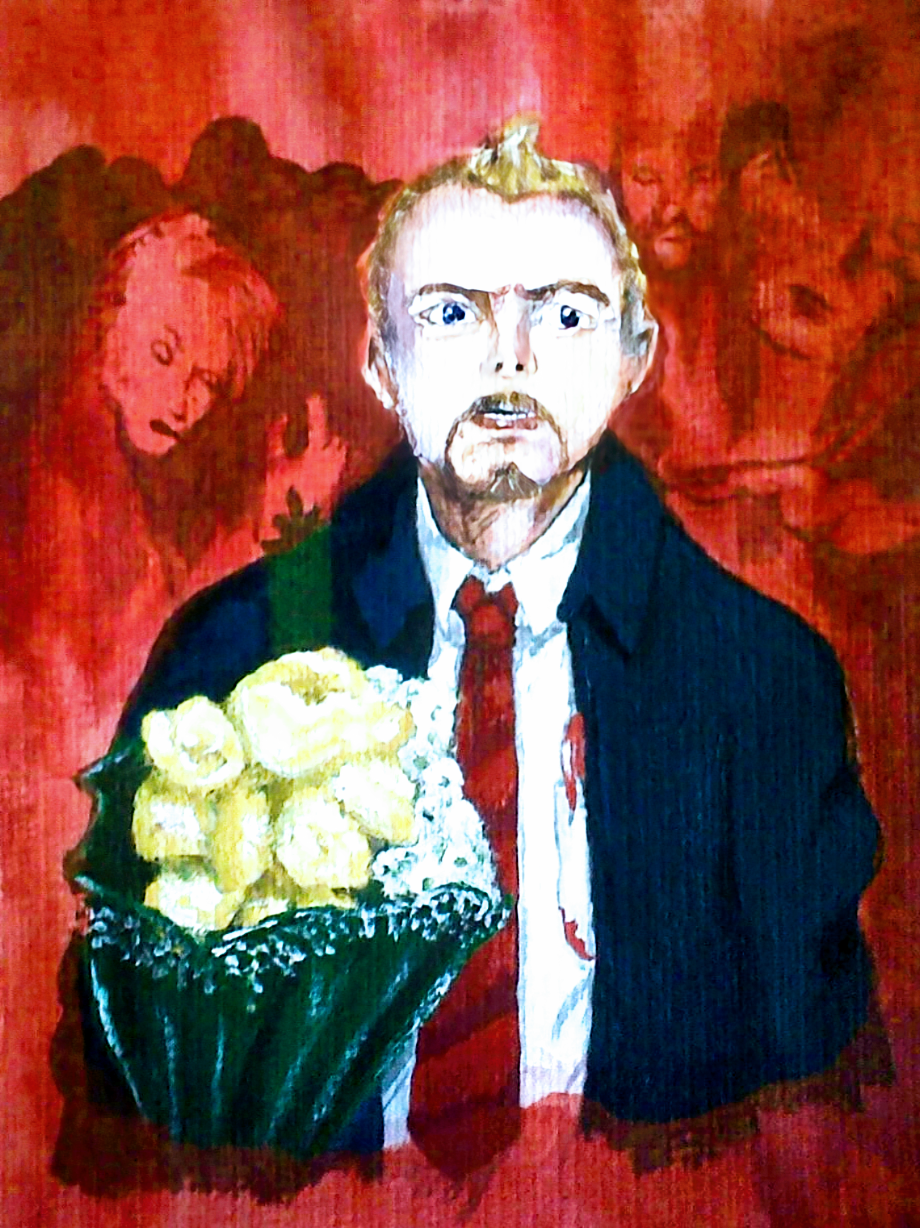
Shaun Riley, the protagonist of Shaun of the Dead, is a character whose journey is defined by personal growth amidst an unexpected and comedic zombie apocalypse. Portrayed by Simon Pegg, Shaun is an ordinary, somewhat aimless man living in London, struggling to find direction in life as his world gradually falls apart around him – both metaphorically and literally.
Shaun is introduced as a likable but flawed 29-year-old who works in an electronics store, living a life of mediocrity and routine. He resides in a modest flat with his best friend Ed and Pete, a more responsible and successful third roommate who often acts as a foil to Shaun’s stagnant lifestyle. Shaun’s relationship with Ed, portrayed by Nick Frost, is central to his life. The two have been inseparable since childhood, but their bond is built largely on inertia, rather than shared ambition. Ed is a lovable layabout who spends his days playing video games, eating junk food, and generally avoiding any kind of adult responsibility, while Shaun, though more responsible by comparison, seems trapped in this same arrested development. Their dynamic is one of mutual dependency: Ed relies on Shaun for a roof over his head and basic functionality, while Shaun leans on Ed for comfort, fun, and a buffer from the pressures of adulthood.
Despite his amiable nature, Shaun’s life is falling apart, and he is largely oblivious to it. His girlfriend, Liz, is frustrated with the lack of progress in their relationship. After three years together, Shaun still hasn’t been able to follow through on his promises to be more present or make significant changes. Their dates are routine and uninspired, always ending up at the Winchester Tavern, a local pub where Ed is a fixture. Liz feels stuck in a relationship that’s going nowhere, and Shaun’s constant excuses – which range from blaming his job to his need to take care of Ed – only heighten her frustration. When Liz finally decides to break up with him, it’s a wake-up call for Shaun, but one that he initially tries to ignore. Instead of taking responsibility, he wallows in self-pity, drowning his sorrows with Ed at the Winchester.
On the surface, Shaun is a quintessential everyman – a man with good intentions but little motivation. He cares deeply about the people in his life, but he lacks the initiative or courage to make meaningful changes. This is best seen in his relationship with his mother, Barbara, whom he clearly loves but tends to neglect. He keeps her at arm’s length, seemingly out of a mixture of embarrassment and emotional avoidance, which is indicative of his wider reluctance to confront difficult truths. His relationship with his stepfather, Philip, is even more strained. Shaun harbors long-held resentment towards Philip, whom he views as cold and overly critical. He refuses to see any redeeming qualities in him, which further highlights Shaun’s tendency to deflect blame and avoid confrontation.
Shaun’s life begins to spiral out of control just as the world around him starts to do the same – quite literally, in the form of a zombie outbreak. Initially, Shaun, like much of the population, is too self-absorbed to notice the signs of the impending apocalypse. The filmmakers cleverly depict this through Shaun’s routines: he walks to the local shop in a daze, unaware of the growing number of shambling, bloodied figures in the streets. This obliviousness is played for laughs but also serves as a metaphor for Shaun’s general state of mind; he’s been sleepwalking through life, and it takes something as drastic as a zombie outbreak to finally shake him from his stupor.
When Shaun and Ed finally realize what’s happening, they decide to take action in their own slapdash, haphazard way. Armed with cricket bats and shovels, they set out on a mission to save their loved ones, starting with Shaun’s mother and Liz. Despite their incompetence and lack of planning, Shaun’s resolve starts to solidify. He is no longer content to simply react to life; he begins to take charge, albeit in his typically bumbling fashion. His leadership is far from flawless, and there’s a dark humor in watching Shaun struggle to rise to the occasion, but the shift in his attitude is undeniable. For the first time, he is taking responsibility – for his life, for his relationships, and for the people he cares about.
One of the most striking aspects of Shaun’s character development is how the apocalypse forces him to re-evaluate his relationships, particularly with his mother and stepfather. When Shaun and Ed reach Barbara and Philip’s house, Shaun is initially dismissive of Philip, who has been bitten by a zombie. However, as Philip begins to die, Shaun is forced to confront his feelings. In a touching scene, Philip expresses pride in Shaun, revealing that his strictness was motivated by a desire to see Shaun succeed. This moment is a turning point for Shaun; it shatters the simplistic, negative image he had of Philip and forces him to reconsider the impact others have had on his life. Philip’s death, though sad, allows Shaun to let go of his old grudges and embrace a more mature perspective.
As the group continues their perilous journey to the Winchester, Shaun’s role as a leader becomes more pronounced. His decision-making improves, and he begins to prioritize the safety and well-being of his companions. He takes on the responsibility of protecting both Liz and his mother, showcasing a side of him that had been buried beneath layers of apathy and insecurity. This newfound sense of purpose, though imperfect, is what ultimately endears Shaun to Liz once again. She sees the man she had hoped he could become — someone capable of growth, empathy, and courage.
The climax of Shaun’s journey occurs in the Winchester, the same pub that had once symbolized his stasis and complacency. Now, it becomes the setting for his final test. As the zombies close in and the situation grows increasingly dire, Shaun is forced to make difficult decisions and sacrifices. He loses people he cares about, including his beloved mother, but through these losses, he gains a deeper understanding of himself and what truly matters. His relationship with Ed, once a source of comfort and stagnation, is also transformed. In a poignant moment, Ed, having been bitten, chooses to stay behind and sacrifice himself so that Shaun and Liz can escape. The bond between the two men, though still strong, must evolve — Shaun can no longer remain tethered to the past or to the version of himself that Ed represents.
By the end of the film, Shaun has come full circle. He has survived the apocalypse not just in the literal sense, but also in a personal, emotional sense. He emerges as a changed man – one who is ready to move forward in life with a clearer sense of purpose. His reconciliation with Liz suggests that their relationship now has the potential to grow, and he seems more willing to confront the realities of adulthood. The final scene, in which Shaun and Liz settle into a cozy domestic routine, shows a version of Shaun who has found a balance between his old self and his new responsibilities. Even his friendship with Ed, now zombified and chained up in the shed, reflects this balance: Shaun still values the comfort and nostalgia of his past, but he is no longer trapped by it.
Shaun’s character arc is a classic tale of an everyman rising to meet extraordinary circumstances, but what makes him so compelling is his relatability. He is not a traditional hero; he is flawed, often selfish, and frequently overwhelmed by life. Yet, through his journey, he becomes someone worth rooting for because he embodies the potential for change that exists within all of us. Shaun of the Dead is, at its heart, a story about growing up, taking responsibility, and learning to let go of the past. Shaun may not be perfect, but by the end of the film, he is undeniably a better version of himself – one who is ready to face whatever life (or the undead) throws at him next.